
The first time a reader asked me about half calorie rice, I’d never heard of it before.
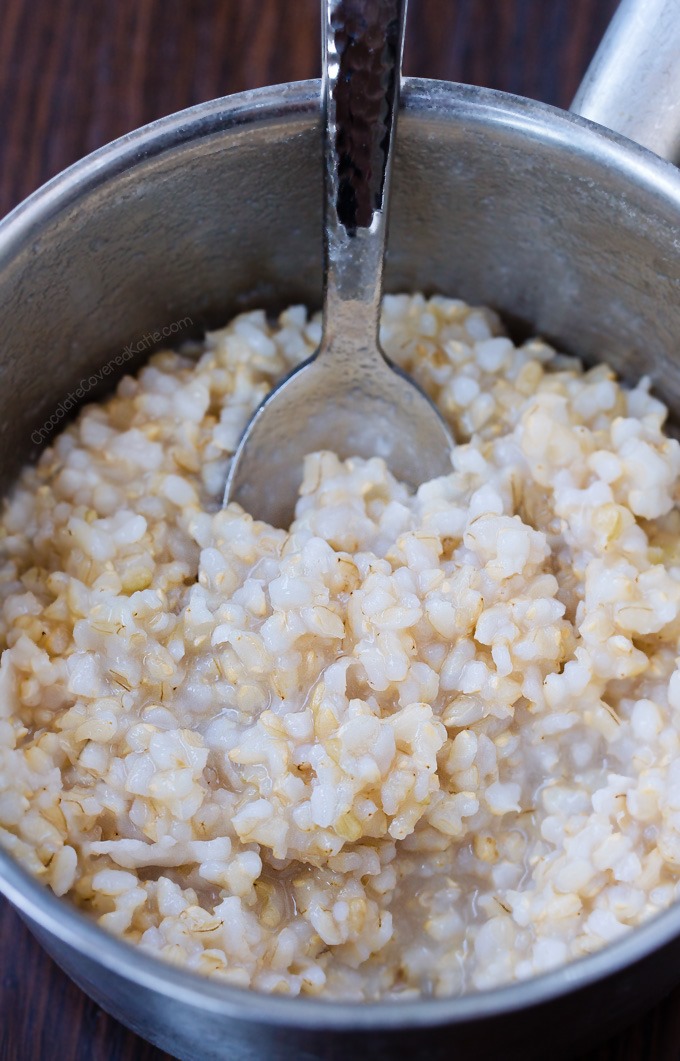

But so many of you have been emailing or leaving comments asking for my thoughts on the half calorie rice trend that I figured it was best to just write a post on it.
(Because I know someone is going to ask… For more on why I make low-calorie recipes even though I’m not counting calories, be sure to read my Katie FAQ Page.)
What Is Half Calorie Rice?
Basically, researchers discovered that if you add a teaspoon of oil when cooking rice, it actually decreases the calories.
A study from the College of Chemical Sciences in Colombo, Sri Lanka found that cooking rice with oil and then letting it sit for 12 hours increased its resistant starch and lowered its calorie count by as much as 60 percent.
The indigestible starch formed during the cooling process prevents some of the rice from being metabolized into glucose during digestion. And reheating won’t increase the calories again, so after letting the rice cool overnight you can season it and reheat as desired.
Why Half Calorie Rice?
Hopefully, if you are a regular reader of my blog, you know I believe in the importance of a balanced diet and am not a fan of weight-loss gimmicks.
Unless your diet is made up entirely of rice—and I do know some people who wouldn’t mind this (Hi, Dad!)—saving calories on just one item might not really change much for you. But the results of the study have possibly bigger implications that could help fight the obesity epidemic around the world in the future.
For example, is there a way to increase the resistant starch in other foods, such as pasta or bread? And personally, the main reason I was intrigued by this study was because it completely contradicts the media’s message that added fat is the enemy. (You probably know, because I talk about it all the time here on the blog, that I am a big proponent of including fat in one’s diet and that my own daily diet has a higher-than-normal amount of added fat.)
If you haven’t seen it yet, here’s a sample of What I Eat In A Day.
So I was thrilled to see scientific evidence backing yet another possible benefit of including a little healthy fat during cooking, and I couldn’t give up the opportunity to share this information, because I know so many readers of my blog are afraid of using any fat at all, thanks to being bombarded with negative messages all over the media.
(FYI, Adding a little fat to vegetables such as tomatoes or kale has also been proven to help one’s body absorb more of the nutrients in the vegetables, because carotenoids are fat-soluble… Seriously, food science is fascinating.)
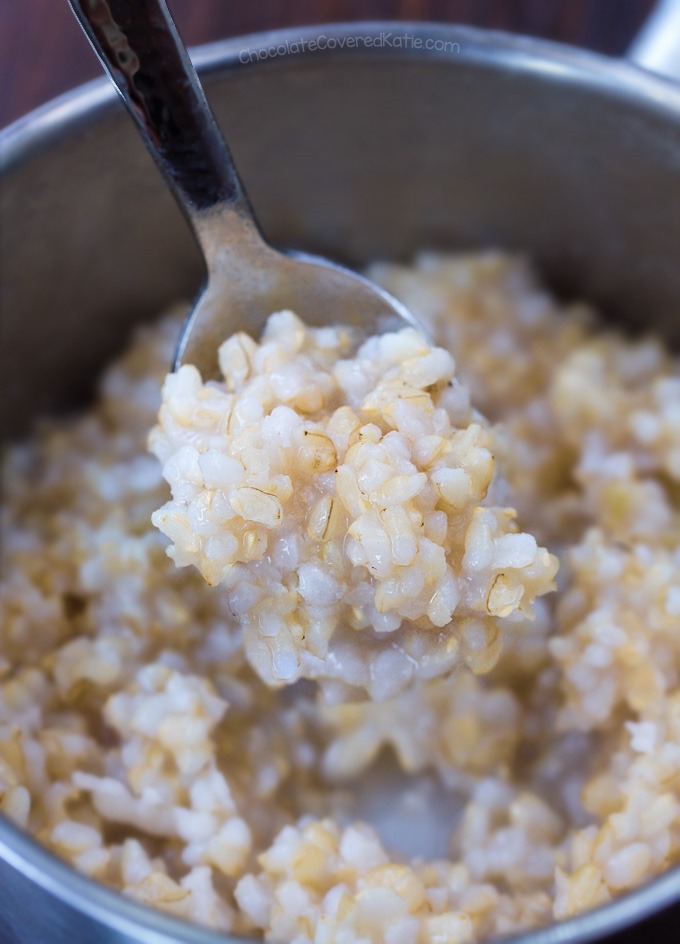
On an entirely unrelated note, I was shocked at how soft and fluffy the rice turned out with this particular cooking method. Even if you are not counting calories, you might never go back to cooking your rice any other way.
Questions & Answers
Does the same idea work for other grains, such as quinoa or oats?
You can definitely use a different grain instead of the rice. Quinoa and barley both cook up nice and fluffy using this method.
I’d guess the lower-calorie property would still apply, but because I’m not a scientist and couldn’t find any sources mentioning testing a different grain, I can’t say that for sure.
Does it work with other oils instead of coconut oil?
Same answer as the above. Using a different oil or a buttery spread will still yield the same delicious results, taste-wise.
Doesn’t adding oil add calories?
The change in starch cancels out more calories than are added in from the oil.
Is it really half the calories?
The studies found that this cooking method reduces the number of calories by 10 to 12 percent in high starch rices and has the potential to reduce the calories further in lower starch rice, up to 60 percent, depending on the type of rice used. (They currently have not tested every type of rice, so this is an estimate.)
Wait!!! Does this mean I can eat twice the amount of rice???!
Okay, this last question wasn’t from a reader. It was from my dad when I told him about the study, because he loves rice more than anyone else I’ve ever met.
So to answer the question… No, Dad, no more rice! 😂
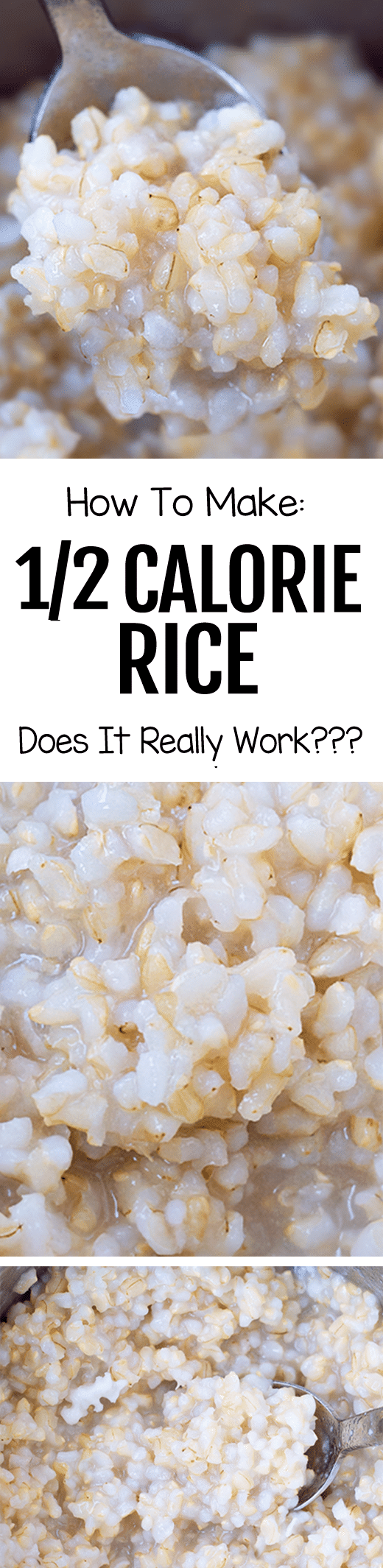
Half Calorie Rice – Is It For Real?
Ingredients
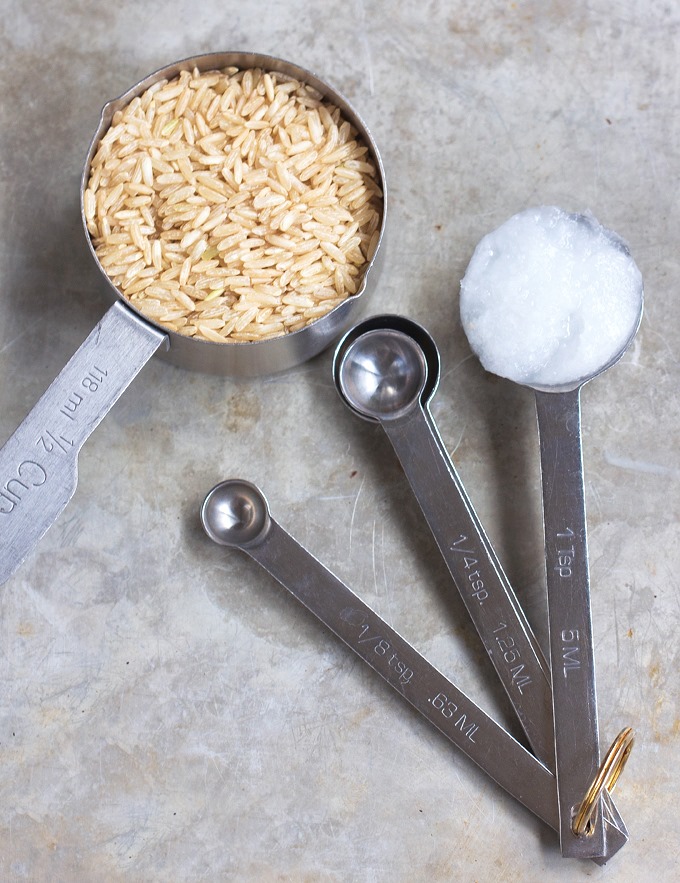
- 1 2/3 cup water
- 1 tsp coconut oil
- 1/2 cup uncooked rice (80g)
Instructions
- Cooking times are based on long or short grain brown rice. In a small pot, bring the water to a boil. Once boiling, lower to a simmer and add the oil. Then throw in the rice and cover the pot. Leave covered on simmer for 40 minutes without ever lifting the lid. Then—still never lifting the lid—turn off the heat but let the rice sit covered for an additional 20 minutes. Still not opening the lid (yes, seriously… don’t lift the lid even to check on it), place the pot in the fridge for at least 12 hours. The next day you should have beautifully fluffy rice that is apparently lower-calorie… but, more importantly, that tastes delicious!! You can add a little salt and any seasonings you wish, and you can reheat the rice if desired.
Video
Notes
Ways To Use Half Calorie Rice:
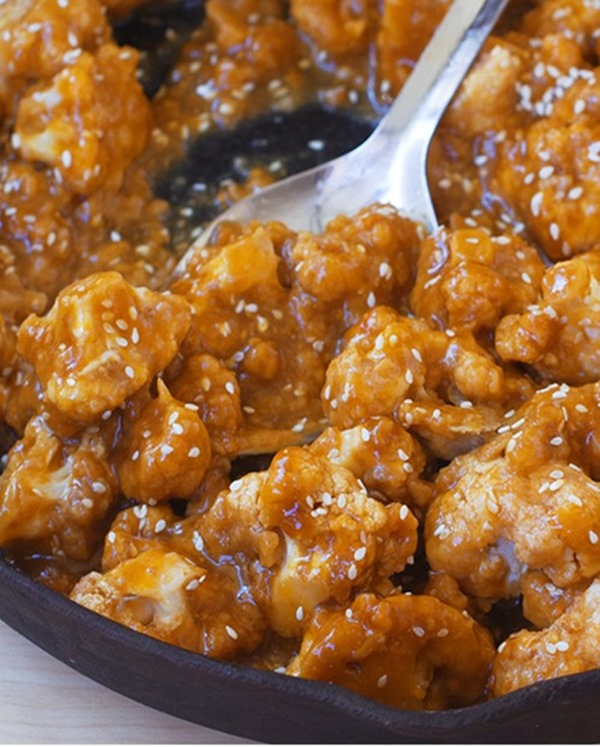
1. Serve with my favorite Sticky Sesame Cauliflower
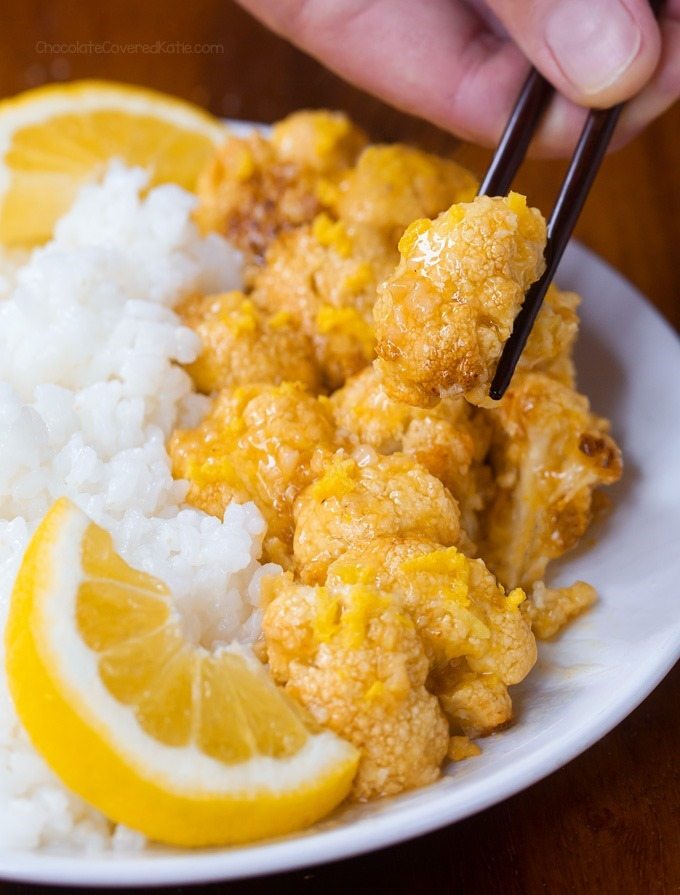
2. Or this recipe for Crispy Lemon Cauliflower
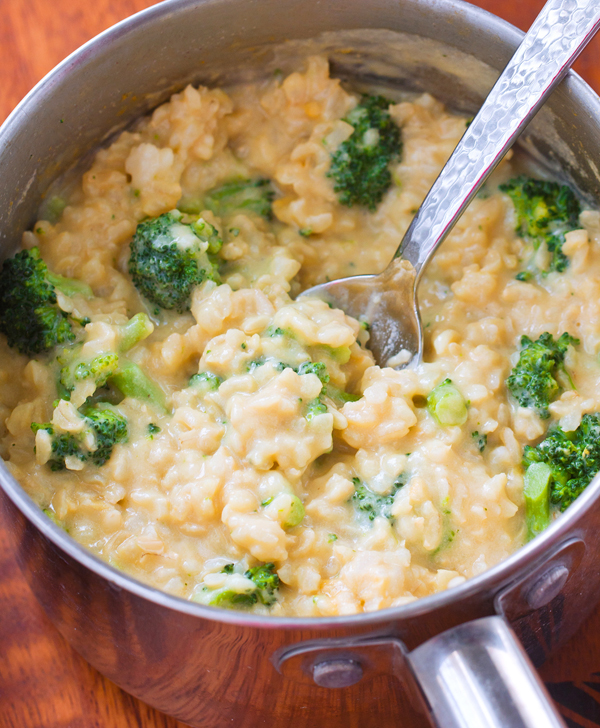
3. Make Cheesy Rice & Broccoli, from the Hello Breakfast ebook
Links / Sources:
- The original press release: https://www.acs.org/content/acs/en/pressroom/newsreleases/2015/march/new-low-calorie-rice-could-help-cut-rising-obesity-rates.html
- An article from NPR that discusses how cooking vegetables with a little fat can help one absorb more nutrients: http://www.npr.org/templates/story/story.php?storyId=106968683
- A write-up in the Huffington Post about the half calorie rice: http://www.huffingtonpost.ca/2015/03/23/how-to-cook-rice_n_6923676.html
- A write-up from The Kitchn about the half calorie rice: http://www.thekitchn.com/cut-calories-in-rice-with-this-surprising-method-227215
- An article in the Washington Post about the global impact it could have: https://www.washingtonpost.com/news/wonk/wp/2015/03/25/scientists-have-figured-out-a-simple-way-to-cook-rice-that-dramatically-cuts-the-calories/











I use a rice cooker for my rice, a set it and forget it way to cook rice. Would I put the entire rice cooker in the fridge? (When I moved to my current town, ALL the stoves are electric and I had spent my entire life cooking on gas. I was never able to figure out how to make rice on the electric stove, so I switched to a rice cooker and never looked back.)
Sorry not sure because (to my knowledge) it hasn’t been studied that way yet. If I were doing it, I would just portion it into a container as I’m sure you already do. But I can’t speak for how a rice cooker method would affect calories.
Jason (media relations)
I always cook rice with oil, salt and crusehd garlic (for savory dishes of course) but the method differs from yours and actually the results are amazing.
first I add the oil (anykind you want to use) then the garlic and salt (if I don’t add it now I totally forget to do it later) when the garlic is somewhat cooked I add the rice and let it cook for a few, as soon as it looks translucent I add the water and cover to boil and then simmer until the water is absorved. Voilà the best rice ever, please try and let me know!!!!
That sounds amazing with the garlic! We will try it for sure!
Nice post! I love food science! Thanks a lot for sharing. Would love to see more of these posts… 😉
I want to try this method but wondering how this cooking method affects the glycemic index if you have diabetes.
We found sources that said it would lower the glycemic index but didn’t find any that said by how much, and I think it would depend also on the type of rice. I’d recommend to talk with a doctor or nutritionist who might have better insight on diabetes and how this recipe might work on a diabetic-friendly diet.
Jason
As a Food Science student myself, I am pretty skeptical about this rice hack lowering the amount of calories by such a drastic amount. I think that everyone metabolizes the same foods SO SO differently that not everyone may reap the caloric decrease! But then again, this probably would give people more incentive to eat MORE rice because it looks delicious! And hey, I would love to try this with another type of oil like sesame or avocado oil!
I have been studying resistant starch for years (on my own) and there are many other foods besides rice that have resistant starch properties like potatoes, green bananas, beans, and pasta. I dont see why this couldnt work on other foods. This is the first I have heard of the oil helping the starch granules during the initial cooking but read the study and found it pretty cool!
Never heard of this hack before. It sounds unrealistic, admittedly. I know little about starch and how it reacts with fat, so I cannot speak on this issue. But I thoroughly enjoyed reading this post. Food science is a heck lot of fun.
And I’m in the same boat as you. Although I did not enjoy, nor feel good, being on a ketogenic diet, I love healthy fats and don’t feel “afraid” of them like some people are. I see so many people avoiding avocadoes, peanut butter, coconut oil, and organic butter, and most of these people I know are overweight. Although it’s way too easy to binge on nut butter for me, therefore I try not to eat it every day.
Thank you for sharing this interesting study with us. I would like to look into this. Have a wonderful weekend.
I’ve actually been adding butter to my rice for a while lol esp after reading the packaging that says to add some. Buttery rice is yummy. But the concept behind 1/2 calorie rice is very interesting. Never heard of it before. I’m not excited about rice as I use to be once I recently found out about the arsenic in it. I feel like I def need to add more grains and such in my diet and not rely mostly on rice. Anyone’s thoughts on the topic?
Quinoa, barley, millet, oats, so many options! Try a health food store bulk bin!
Ok… the oil has lots of calories… that would ADD to the calories. I do know that cooling it down and then eating it either cold or reheated does make it a pre-biotic… and it doesn’t cause the blood sugar spikes for diabetics. I won’t be adding the oil though. Sorry.
Read the post again. Katie clearly states that using this method will change the starch, and the calories will be canceled out.
This is amazing! I’ve always added a bit of oil to my rice before cooking because I like how buttery it tastes when it’s done. Had no idea it was actually doing some good! Thanks for posting Katie!
My question is do I follow the same concept but follow cooking times on the package depending on the rice I use? Example, jasmine rice cooks in 20 minutes
Yes, definitely different types of rice will need a different amount of time.
You mentioned that lower starch rices have a higher caloric reduction. Which types of rice are lowest in starch? Is Basmati?
The study stated that it hadn’t tried every type of rice but that it expected brown rice to have a larger reduction than white.
I have never heard of this before! I always add about a tablespoon of butter to the water while the rice is cooking. I wonder if the 12 hours of cooling is a big part of creating the resistant starches? I don’t do that part and don’t care about low calorie foods but found this interesting anyways!
Actually the cooling is the most important step in this procedure. I am studying nutritional sciences and am aware of the fact that cooling does lead to a change in the type of starch. But I don’t think that one can say with certainty by how much the caloric content is actually reduced. Never heard about that oil thing before. Sounds interesting though. Unfortunately I can’t find the study to take a deeper look.
Sources are linked at the bottom of the post. Here is the link to the original press release. Hope that helps! https://www.acs.org/content/acs/en/pressroom/newsreleases/2015/march/new-low-calorie-rice-could-help-cut-rising-obesity-rates.html
I’m not a calorie counter, but I do love the science behind this! Plus I could use all the help I can get on making my grains fluffier. Excited to try!
This idea is explained in the book “The Clever Guts Diet” by Michael Mosley.
It works for other starches, too- like potatoes, pasta, bread.
These days I refrigerate all starches after cooking, and reheat before using. Once you get used to the extra “loop” and the timing, it is very convenient too. So I cook my pasta, quinoa, rice etc after breakfast and it stays in the fridge until I make dinner. Or I make a pasta salad after breakfast and refrigerate it until cold.
I took food science classes in undergrad for my dietetics degree and never heard of this before! Definitely going to have to look this up and research it now!