
Thanks to many of your blog posts, I learned that last week was National Eating Disorder Awareness Week. You had some great, insightful posts on intuitive eating and on celebrating our bodies for the amazing things they enable us to do.
When one thinks of eating disorders, anorexia, bulimia, and compulsive overeating come to mind. But in this post, I want to highlight another eating disorder, because I feel it’s the one to which we healthy-living bloggers and readers can probably most relate:
Orthorexia Nervosa
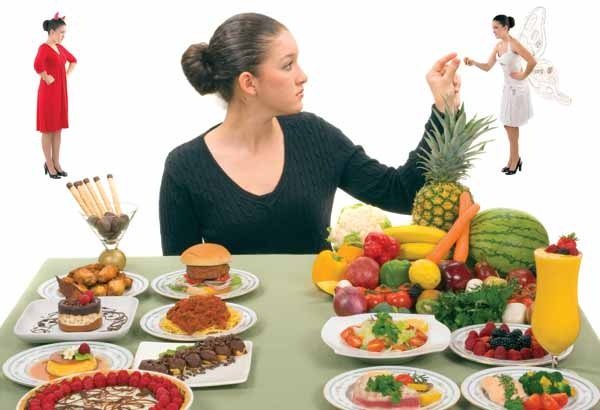
Orthorexia Nervosa is characterized by an excessive focus on eating healthy foods. Basically, its sufferers start out with a simple desire to live a healthy lifestyle, but they become so preoccupied with eating healthily that it becomes an unhealthy obsession.
Unlike with anorexia, orthorexics don’t necessarily think they’re fat. Their underlying motivation, therefore, is not to be thin or lose weight, but to be “pure.” However, with such restrictive diets, they can become just as malnourished as anorexics. People suffering might avoid certain foods, such as non-organic foods, cooked foods, or processed foods. (Feel free to click over to the following post for more about my thoughts on processed foods.)
This doesn’t mean that every vegan, raw foodist, or person who strives to eat a healthy diet has orthorexia. It’s only when the healthy diet becomes an obsession; when a person spends hours planning out his/her “perfect” diet, calculating nutrients, preparing everything in a very specific way (and not letting anyone else prepare his/her food), that one can be seen to have a problem.
People suffering from orthorexia may display some of the following signs:
- Feeling virtuous about what they eat, but not enjoying their food much
- Continually cutting foods from their diet
- Experiencing a reduced quality of life or social isolation because their diet makes it difficult for them to eat anywhere but at home
- Feeling critical of, or superior to, others who do not eat as healthily they do
- Skipping foods they once enjoyed in order to eat the “right” foods
- Choosing to eat foods based solely on nutritional value, instead of eating what they’re craving
- Feeling guilt or self-loathing when they stray from their diet
- Feeling in total control when they eat the “correct” diet
I can definitely see myself, if not careful, displaying some of the other orthorexic tendencies, like feeling critical or looking down on certain foods, such as white bread, white pasta, and white rice, deeming them “valueless.” Does having one of the characteristics mean I have orthorexia?
No, of course not.
But I do have to remind myself that just because it’s white bread does not mean it’s worthless. After all, a food is so much more than its numerical nutritional value. The French have been eating white bread for years, the Japanese eat white rice, the Italians enjoy white pasta… and so on.
Sure, it’s great to eat a healthy diet 90% of the time, mostly choosing whole-grains over white ones. But honestly, a little nutritionally valueless piece of white-flour-white-sugar cake every now and then is not going to hurt you. It’s not something you should feel guilty about, but something to be enjoyed! And the enjoyment you can get out of eating it will boost your mental (and thus physical) health! My great-grandma ate processed foods, drank coffee, and—as an Italian—loved her daily servings of white pasta. But one thing my great-grandma did NOT invite into her life was stress. She lived well into her 90s.
There’s a lesson to be learned here: Stress and guilt are much more detrimental to one’s health than eating a few refined grains every now and then. In the end, “Orthorexia Nervosa” is just a label. Whether you fit that label or not, we can all probably benefit from the reminder that food is only one component to a healthy life. Eat what your body truly craves, exercise (but not excessively), feed your soul, and–above all–try to stress as little as possible. Such is the way to a healthy life. (Sounds like something Confucius would say!)
What are your thoughts on all of this?


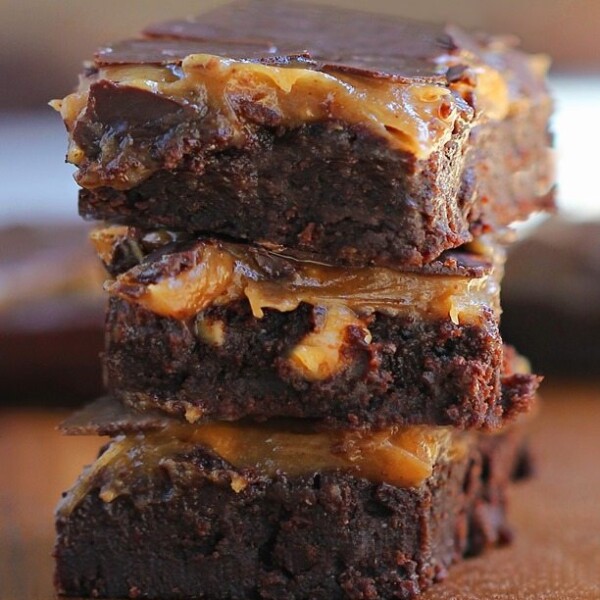









Wow Katie! You’re my favorite blogger out there- your site is practically my homepage. I made the brownies several times, and I’d take a picture, but they’re almost out 🙂 I had orthorexia last year, and it just makes me feel kind of enlightened when someone touches on the subject. People pretty much think of anorexia and bulimia as the only eating disorders. Your recipes are delicious! I’m definitely going to link back to you in my blog. Once again, well done (again)!
hey katie ! im a reader from sweden who loves ur blog! keep doing ur thing! love jenny
A few weeks ago I realized and admitted to myself that I may have a problem. I am always thinking about food, reading about it, hearing about “this is good for you” “this is bad for you” etc, and usually they contradict each other. I’ve been gluten-free for 8 months now (I am not Celiac), and while it has really helped with digestion issues, it has led to thinking maybe I should cut out this or that because of some other issues I have had (daily runny nose without having a cold, inflammation issues in my feet, etc). I’ve become quite obsessed to the point that I just give up at times because I just don’t know what to cut that’ll help. I’ve strictly stuck with eating gluten free though since I believe it does make me feel better, but I’ve been wanting to “test it” since my 12 week mark…and now here I am at 8 months and scared to test it – fearful of how it will make me feel. Obviously if I do test it at some point, and it makes me feel awful, I will stick with being GF, but there is just that not-knowing that is driving me nuts. What if gluten really isn’t an issue? Could it be coincidence that my digestion improved, despite going GF? I have a hubby and two awesome children (almost 6 and almost 5) that are not fully GF, but some meals are just naturally GF so they are “part-time”. It is really tough sometimes because they can be a bit picky at times, so I haven’t taken them fully GF with me, worried they might not eat enough. Sometimes I think life would be so much easier for us all if I wasn’t eating GF…but I’m just so afraid to test it.
Anyways 🙂 Thank you for putting a name to what I had been admitting to myself. Love your posts, and will keep on reading!
this is so great, I have a few people in my life who I would put under this category but havent been able to put it into words before. Very well written! Thanks
Hi Katie-I just came upon this post, and it’s the exact thing I was looking for! I have had a problem with excessive orthorexic tendencies- to the point where 95% of my diet is based on raw fruits and vegetables. I also tend to get really bad sugar cravings, but never satisfy them with anything other then fruits or artificial sweetners! I’m a vegan also- any suggestions on how to make my diet more wholesome and prevent these sugar cravings/feelings of starvation?
I see myself very much in this, have been a weight watcher on maintence for over a year, I go every week to listen to the talk about losing weight and healthy foods and get weighed, if I gain a pound or two I’m very upset and hate myself, my friends say I’m getting brain washed each week and it’s gone to my head, since they don’t have classes for people who have reached there goals it’s hard not to take this to heart, didn’t know there was a name for this, thank you, but I don’tthink it’s going to help me at this stage. I am 9 pounds under my goal now and feel like it should be more.
THANK YOU for writing a post on this! I have suffered from a mixture of orthorexia and anorexia for the past few years, and I can personally say that orthorexia is just as dangerous as anorexia! With all of the focus on “clean eating” lately I believe people are just fueling this disease. It is sad because most people don’t realize they have an eating disorder until things are no longer in their control any more. Through recovery I am learning moderation is the key to a true healthy lifestyle. Thank you again for raising awareness about this eating disorder, as it truly is just as harmful as the rest and yet it seems to go mostly unnoticed!
Wow. Thank you so much for linking to this. I didn’t know that what I’ve had has a name. I’m slowly getting over it, but not completely. Like I won’t go on a retreat with my students because I don’t know what the meals will be…but if I’m craving extra peanut butter or chocolate, I’ll go ahead and do it.
Ugh, the white bread thing. Have to work very hard on getting over that.
Thank you.
Ladies, I resonate with so many of you who are recovering from anorexia or orthorexia — thank you all so much for your replies to this super post, and thank you Katie for blogging about this lesser-known eating disorder.
I’m now 2 years along from the point when I realised something was definitely ‘off’ in my life, despite being fit and slender and ‘happy’ with my looks — the problems lay in my relationship to food and eating, and that stress overflowed into my closest relationships: my kids and my husband. I was moody, anxious, ‘prickly’ and hard to be with around any eating episode. The irony was I truly believed, hand on heart, that I was doing good, doing the best for my body. What I didn’t truly see was that the body and the MIND belong in the same ‘healthy’ sphere. Stress is the stealthiest most potent killer.
So then I sought psychological help… it has been a difficult road, but I’ve come a long, long way. At this point, I can say that at least everyone else in my life is happier now, bcz I’m easier to be around ! I’m much more flexible around food & meals, but I’ve gained weight… not an unhealthy amount, and at least my menses has re-started — but I’m very unhappy about being bigger than I was. I am learning to deal with that, working on my body image ‘disorder,’ — and so grateful all the while for my husband, my kids, my health and my amazing, complex and mysterious bodymind. I’m also very grateful to have found (just recently, spring of 2013) this community forum and CCK.
My daughter and I were just talking about this kind of abnormal behavior associated with food. Being a pastor’s wife, we often entertain and are invited as guests for meals. The 80% / 20% seems like a reasonable plan. Also, to realize stress is a main factor in our overall health. Thanks for the article.
I have to respectfully disagree. As someone who had to lose a significant amount of weight, that meant skipping foods I once enjoyed (such as cake) in order to eat the “right” foods and choosing foods based on nutritional value instead of cravings. It also did lead to some social isolation for not eating the “expected” foods – people like it when you eat what they eat.
Eating things such as sugar or white flour in moderation does not work for everyone. I am sure it is the same with people who have diabetes or other metabolic disorders.
This may be good advice for people without these concerns, but it would be very unhelpful and insensitive to give it to people who do have these concerns. There really isn’t any reason why people do need to eat white sugar or flour or that it is a sign that they are living healthfully. If they want to, that’s there decision, but they aren’t requirements for good health.
Of course, I’m not ruling out that some people some from some sort of eating disorder called orthopraxia.
I see your point, however I agree with Katie that trying to be perfect might do more harm than good. If you are constantly obsessing over eating healthy, avoiding social situations because of food, and controlling every calorie that enters your body, mentally that is not good for you. I completely agree you must avoid things you are sensitive to (gluten, dairy and sugar in my case) but that doesn’t mean you have to deprive yourself or miss out on opportunities to enjoy life.