
Thanks to many of your blog posts, I learned that last week was National Eating Disorder Awareness Week. You had some great, insightful posts on intuitive eating and on celebrating our bodies for the amazing things they enable us to do.
When one thinks of eating disorders, anorexia, bulimia, and compulsive overeating come to mind. But in this post, I want to highlight another eating disorder, because I feel it’s the one to which we healthy-living bloggers and readers can probably most relate:
Orthorexia Nervosa
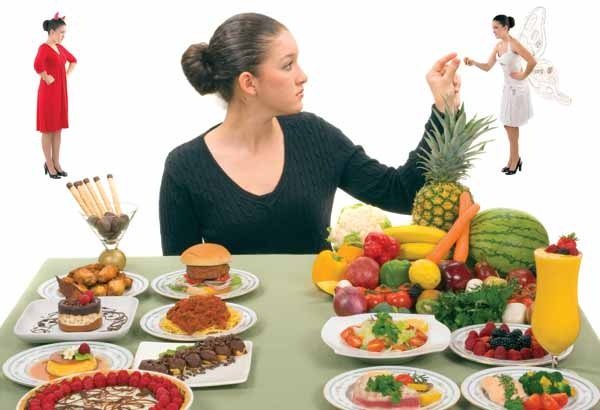
Orthorexia Nervosa is characterized by an excessive focus on eating healthy foods. Basically, its sufferers start out with a simple desire to live a healthy lifestyle, but they become so preoccupied with eating healthily that it becomes an unhealthy obsession.
Unlike with anorexia, orthorexics don’t necessarily think they’re fat. Their underlying motivation, therefore, is not to be thin or lose weight, but to be “pure.” However, with such restrictive diets, they can become just as malnourished as anorexics. People suffering might avoid certain foods, such as non-organic foods, cooked foods, or processed foods. (Feel free to click over to the following post for more about my thoughts on processed foods.)
This doesn’t mean that every vegan, raw foodist, or person who strives to eat a healthy diet has orthorexia. It’s only when the healthy diet becomes an obsession; when a person spends hours planning out his/her “perfect” diet, calculating nutrients, preparing everything in a very specific way (and not letting anyone else prepare his/her food), that one can be seen to have a problem.
People suffering from orthorexia may display some of the following signs:
- Feeling virtuous about what they eat, but not enjoying their food much
- Continually cutting foods from their diet
- Experiencing a reduced quality of life or social isolation because their diet makes it difficult for them to eat anywhere but at home
- Feeling critical of, or superior to, others who do not eat as healthily they do
- Skipping foods they once enjoyed in order to eat the “right” foods
- Choosing to eat foods based solely on nutritional value, instead of eating what they’re craving
- Feeling guilt or self-loathing when they stray from their diet
- Feeling in total control when they eat the “correct” diet
I can definitely see myself, if not careful, displaying some of the other orthorexic tendencies, like feeling critical or looking down on certain foods, such as white bread, white pasta, and white rice, deeming them “valueless.” Does having one of the characteristics mean I have orthorexia?
No, of course not.
But I do have to remind myself that just because it’s white bread does not mean it’s worthless. After all, a food is so much more than its numerical nutritional value. The French have been eating white bread for years, the Japanese eat white rice, the Italians enjoy white pasta… and so on.
Sure, it’s great to eat a healthy diet 90% of the time, mostly choosing whole-grains over white ones. But honestly, a little nutritionally valueless piece of white-flour-white-sugar cake every now and then is not going to hurt you. It’s not something you should feel guilty about, but something to be enjoyed! And the enjoyment you can get out of eating it will boost your mental (and thus physical) health! My great-grandma ate processed foods, drank coffee, and—as an Italian—loved her daily servings of white pasta. But one thing my great-grandma did NOT invite into her life was stress. She lived well into her 90s.
There’s a lesson to be learned here: Stress and guilt are much more detrimental to one’s health than eating a few refined grains every now and then. In the end, “Orthorexia Nervosa” is just a label. Whether you fit that label or not, we can all probably benefit from the reminder that food is only one component to a healthy life. Eat what your body truly craves, exercise (but not excessively), feed your soul, and–above all–try to stress as little as possible. Such is the way to a healthy life. (Sounds like something Confucius would say!)
What are your thoughts on all of this?









This is very insightful, I have never heard of Orthorexia nervosa before. But I have heard something of being obsessively concerned of one’s diet. So its nice to see a name for it. I made a comment before about how I like seeing things here that I will actually allow myself to eat, well I want to make that clear. I am a type 1 diabetic, so when it comes to sugary things, or high glucose things, I have them rarely. I usually make them myself too. I haven’t had any grains or actual candy in over 4 years. I do feel guilty sometimes but it is more from high fat and high protein meals that end up bringing my glucose numbers high because of gluconeogenesis (that is the breakdown of protein and fat into glucose, if you don’t know). I am also trying to do the supposed impossible and heal myself from this terrible disease, so thats where my guilt resides as well, when I do something bad. But as for healthy people, there is no need to obsess, and I don’t think I need to obsess as well. I can see someone being Orthorexia nervosa being very stressed and having chronic stress is no way to live.
Thanks for this post! My aunt displays many of these symptoms – it’s to the point that if she is at a family gathering, she demands that my mom (who is a food safety freak) has to cook her food separately and to her specifications (meat can only be thawed in the fridge, cannot touch plastic wrap or aluminum foil, cannot be grilled, etc.). Before her divorce, she would berate my uncle about eating birthday cake or red meat at kids’ birthday parties. It was ridiculous! She’s a size zero because she’s terrified of eating just about everything because she thinks it will cause cancer or another disease. I can’t imagine being so obsessed with eating a “pure, healthy diet” that I was essentially starving myself for lack of options, but that’s basically what my aunt is doing. It’s really sad to watch it happen.
Thank you so much Katie for this post! In February, 2014, I was discharged from my part-time hospitalization because I was diagnosed with Anorexia. I was doing really, really well after I got discharged! I would have a slice of pizza, chocolate cake, and even candies. But now I can’t find myself the eat those. I feel so guilty afterwords. I feel as though I will gain weight. I’m not trying to lose weight I’m just trying to eat healthy all the time and it is really affecting my life. I fit all the categories of having Orthorexia Nervosa. I am trying really hard but my eating disorder is still really strong. I am trying to fight it by myself, without telling my parents. This post is really motivating me to have that slice of cake. I will recover slowly by adding a little bit of sugar at a time, I don’t want to overload. Thanks Katie! 🙂
Wow, what a great post Katie.
I feel it relates to me in some ways. My boyfriend was just telling me today how I seemed to be so much happier and care-free back when we met about 3 years ago. He said it was all before I started being too serious about eating healthy and I had on “a couple extra pounds.” Reading this really made me feel better and not to stress out or think the world is ending if my diet isn’t 100% perfect all the time and instead I should be enjoying my life. Thank you! 🙂
Someone said ” moderation in all things, including moderation. ”
Keep up the good work, Katie.
I totally agree! I have been thinking about this for a long time. Studies show that if you eat what you enjoy, you will be healthier than only eating very healthy foods. But you can eat delicious food that’s healthy at the same time, which is where you come in- I love your recipes, one of my favourites is Gingerbread Banana Bread, there was little sugar so the subtly spicy ginger and cinnamon flavor really shone through. I also love the Janet and Greta cookbooks, they have the exact same focus and their recipes are amazing! Even though healthy food can be delicious with the right recipes (and fruit is always delicious), I will most likely never say no to any delicious dessert, no matter the calories and sugar content! However to make up for it, I do some sit-ups or crunches to strengthen my abdominal muscles or go for a refreshing, energizing jog in the morning. Love this post, thanks Katie for addressing this!
-Marcela, 13
9 pages of comments, no wonder this is a very important topic and i’m glad you wrote about it. thanks katie for addressing this immensely important. these days people try stuff like paleo diets because our ancestors ate that and its pure and all that, but nowadays we have so much more options so why leave it all to waste? what’s the point of life if we dont enjoy it (in moderation of course)? you read a magazine and you see celebrities and all the smoothies and cleansers they try and the tough workouts they do and how it can help you and you really need it. but these celebrities are only doing it because they need to lose weight for the red carpet. they don’t need to build muscle, they don’t need to get abs, they need to lose weight. but realistically? everyday people like me and you don’t need to lose weight to fit into a size 4 dress. what helps the most is building muscle. and muscle helps you burn fat, fast, and helps you to get the healthiest you can be. and how do we do this? not 2- hour long sessions at the gym. try rock climbing! soccer! something fun that doesn’t help you get a tiny waist, but a strong waist and a strong, healthy body. that’s how. and for food? whole, nutritious food. the kind that our ancestors ate, plus more. stuff to enjoy a full, healthy, whole, happy life. thanks.
That eating disorder is not even official diagnosis. I am not trying discount those who have it. I’m sure that is just as bad as anorexia. I just hope people don’t get labeled that just because they eat super healthy and don’t splurge as much as someone or dr. thinks they should.
Hi! 2 years ago I was actually diagnosed with orthorexia and was down to 75 pounds two weeks before graduating college. I was a collegiate d1 soccer player and started to focus a lot on health as I was becoming captain. Was the worst thing I could have ever asked for. But I made it. Without any help (besides friends and family of course). Summer 2015 I decided I could not be this weak and isolated anymore and made changes. I want my competitive physicality back. So I began to eat more and workout. Of course this took me the long route to recovery, but since I have won many marathons and shorter races. As well as, 40 miles and weight lifting everyday. I am up to my healthy weight and feel amazing. I still struggle with eating choices but orthorexia is never an option for me again!
Thanks for this post! I really appreciate how honest you are and your encouragement for us to consider our own approach to food!