
Thanks to many of your blog posts, I learned that last week was National Eating Disorder Awareness Week. You had some great, insightful posts on intuitive eating and on celebrating our bodies for the amazing things they enable us to do.
When one thinks of eating disorders, anorexia, bulimia, and compulsive overeating come to mind. But in this post, I want to highlight another eating disorder, because I feel it’s the one to which we healthy-living bloggers and readers can probably most relate:
Orthorexia Nervosa
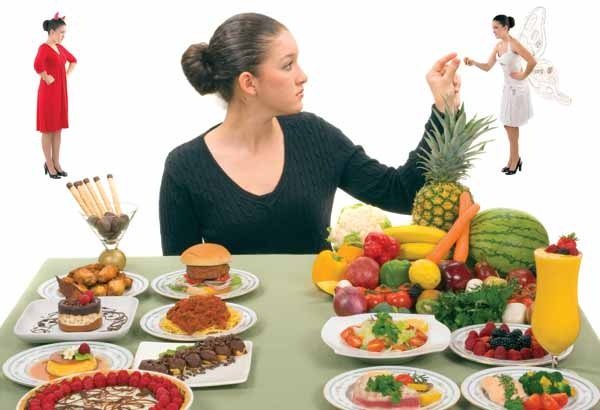
Orthorexia Nervosa is characterized by an excessive focus on eating healthy foods. Basically, its sufferers start out with a simple desire to live a healthy lifestyle, but they become so preoccupied with eating healthily that it becomes an unhealthy obsession.
Unlike with anorexia, orthorexics don’t necessarily think they’re fat. Their underlying motivation, therefore, is not to be thin or lose weight, but to be “pure.” However, with such restrictive diets, they can become just as malnourished as anorexics. People suffering might avoid certain foods, such as non-organic foods, cooked foods, or processed foods. (Feel free to click over to the following post for more about my thoughts on processed foods.)
This doesn’t mean that every vegan, raw foodist, or person who strives to eat a healthy diet has orthorexia. It’s only when the healthy diet becomes an obsession; when a person spends hours planning out his/her “perfect” diet, calculating nutrients, preparing everything in a very specific way (and not letting anyone else prepare his/her food), that one can be seen to have a problem.
People suffering from orthorexia may display some of the following signs:
- Feeling virtuous about what they eat, but not enjoying their food much
- Continually cutting foods from their diet
- Experiencing a reduced quality of life or social isolation because their diet makes it difficult for them to eat anywhere but at home
- Feeling critical of, or superior to, others who do not eat as healthily they do
- Skipping foods they once enjoyed in order to eat the “right” foods
- Choosing to eat foods based solely on nutritional value, instead of eating what they’re craving
- Feeling guilt or self-loathing when they stray from their diet
- Feeling in total control when they eat the “correct” diet
I can definitely see myself, if not careful, displaying some of the other orthorexic tendencies, like feeling critical or looking down on certain foods, such as white bread, white pasta, and white rice, deeming them “valueless.” Does having one of the characteristics mean I have orthorexia?
No, of course not.
But I do have to remind myself that just because it’s white bread does not mean it’s worthless. After all, a food is so much more than its numerical nutritional value. The French have been eating white bread for years, the Japanese eat white rice, the Italians enjoy white pasta… and so on.
Sure, it’s great to eat a healthy diet 90% of the time, mostly choosing whole-grains over white ones. But honestly, a little nutritionally valueless piece of white-flour-white-sugar cake every now and then is not going to hurt you. It’s not something you should feel guilty about, but something to be enjoyed! And the enjoyment you can get out of eating it will boost your mental (and thus physical) health! My great-grandma ate processed foods, drank coffee, and—as an Italian—loved her daily servings of white pasta. But one thing my great-grandma did NOT invite into her life was stress. She lived well into her 90s.
There’s a lesson to be learned here: Stress and guilt are much more detrimental to one’s health than eating a few refined grains every now and then. In the end, “Orthorexia Nervosa” is just a label. Whether you fit that label or not, we can all probably benefit from the reminder that food is only one component to a healthy life. Eat what your body truly craves, exercise (but not excessively), feed your soul, and–above all–try to stress as little as possible. Such is the way to a healthy life. (Sounds like something Confucius would say!)
What are your thoughts on all of this?









Katie, this attitude is the reason your blog is on my short list of healthy eating blogs I subscribe to. As a fat person trying to separate eating and being healthy from losing weight (because in me that causes some REALLY unhealthy behaviors and doesn’t work) finding healthy eating blogs that are not moralistic about food is really difficult.
Thank you for not shaming anyone for their eating choices, for reminding us that healthy food can be healthy and taste good and for modelling balance and size acceptance. I love how down-to-earth and personal you are, so thanks for just being you. eileen
Very informative! This was what my doctor diagnosed me as and I remember not thinking it was a real “disease”. I’m working on my disordered thinking though!
This is a very well written post Katie! I have definitely learned the hard way, unfortunately, to feed my body what it is craving and not just what i feel is the “perfect” nutrient at the time. I love that once variety is introduced into a lifestyle, whether it be regarding food, books, fitness, hobbies; it always makes the day a little brighter and allows for a sense of anticipation! Although i may look down on nutrient-void foods sometimes as well, i try never to bash anyone else’s food choices because different things work for different people! 🙂
I definitely have some orthorexic tendencies, but I try to banish them. I don’t allow myself, almost ever, “unhealthy” food when it’s the only food around to eat, whether or not I am starving. And that’s just bad.I try to relax a bit, and have a bite or two of white bread that looks delicious, or a lick of ice cream when I crave it. It’s just that I’m afraid that if I allow myself this, from time to time, I’ll get back to my old habits and reaaaally bad eating. When I was like 13, 14, I ate pretty awful, fruits and veggies were rare and not really liked. I just don’t want to go back to that.
I have never heard of that eating disorder and thank you for posting information on it! It was very interesting to read.
Have a great week 😉
As probably one of your only male readers, I can say that I think for us men, orthorexia can be even more of a problem than anorexia. The media doesn’t tell men to be skinny, but it DOES bombard us with “pure and healthy” messages so we’re just as susceptible as the women to this disease.
This is one of the most well-written posts I have seen in a long time, and I second the comment that you ought to look into a career in journalism.
I’m a male, and I can admit that I’ve becomes slightly orthorexic. When I learned how evil saturated fat was, I got all bent out of shape about the 1 gram in canola oil, or the .5 grams in oats. It was pretty ridiculous, and I was missing out on a variety of foods. Now, I don’t really pay attention to the amount of saturated fat I eat, I just try to eat healthy oils, and leaner meats. I even do coconut oil. I’m so glad that I’ve gotten over the days of adding up those tiny numbers in my head.
i once read about a girl who died becaus all she ate was carrots. you would think eating carrots is a healthy thing, but not always so if its all you eat.
love you and your great posts and funny pictures!
Ok you already have more comments on this post than I get in a month, but I had to add to the comments and say that I loved this post and it is SO relavent to our lives as healthy bloggers and everyone of us should read this and try to see that health isn’t just about food!
Well said!
I think I have borderline orthorexic tendencies! I can let myself enjoy ‘naughty’ foods – as I see them – on occasion when I’m at home, and feel in control of the rest of my diet. (eg Lemon posset yesterday!!!) Take me on holiday or out to dinner – at someone’s house or a restaurant, all that matters is that I’m not the cook – and I go a bit peculiar!!! Either I feel guilty and cling to the things I believe / know to be as healthy as is possible instead of eating what I really want, or I eat the less healthy thing, feel really guilty, decide I’ve ruined everything and descend into a spiral of crappy food that doesn’t actually make me happy a lot of the time…. I’m a little bit crazy!!! At least I do realise this is a sign I’m not healthy yet!
Great post, thanks!
Interesting….I didn’t know they had a name for this.
I agree with the last commenter, health isn’t just about food it’s about exercise, stress management, etc. If we regularly exercise and try to eat as much whole foods as we can then that’s the best!
Thanks for this post, Katie! Your blog reaches so many people and this message needs to be heard. For me, I have to occasionally step away from blogging (my own personal entries and reading others) because I find myself developing obsessions with comparing my eating habits to those of others too much–it really is a slippery slope! Kudos to you for hitting the nail on the head.
Keep on rockin’ 🙂
I had never heard of this until I saw it mentioned in the latest VegNews. Katie, your writing style is commendable as is your ability to share your true feelings. I can’t believe you ever worry about coming across as “holier than thou” because the opposite is true! Although you are amazing, you somehow make it impossible for people to hate you, even though I know I’m not the only one who wishes she were as amazing as you!
Great post Katie! I’m very glad you addressed this! I definately agree with everything you have said. I’m one who chooses to eat very simply, eat raw and organic whenever possible just because my body feels better when I eat that way, I have more energy and I sleep better, less mood swings. I have alot of different food allergies and such and Celiac Disease so eating simply and easy to digest foods is a must for me.
But I will go out to eat at restaurants and get a nice heaping bowl of gluten free pasta with my family. (Biaggis, outback steakhouse, bonefish grill) to name a few great gluten free restaurants who will make things vegan. I feel like everything has its place and if someone enjoys eating something than they dang well are entitled to enjoy it. 🙂
Have a great week!
Melissa
This was a great post, very informative. I definitely display a lot of those qualities at various times and didn’t know there was a name for it. I’m glad you posted this, it helps to see that some of these things really are problems that other people struggle with too. Thanks again for posting this!
Have a great Monday!
My ED definitely started out as orthorexia and transpired to what it is. The internet (and media in general) is a blessing yet a curse.
Hope you are able to have a mindful Monday! (Yes, I’m loving alliterations)
bec xo