
Thanks to many of your blog posts, I learned that last week was National Eating Disorder Awareness Week. You had some great, insightful posts on intuitive eating and on celebrating our bodies for the amazing things they enable us to do.
When one thinks of eating disorders, anorexia, bulimia, and compulsive overeating come to mind. But in this post, I want to highlight another eating disorder, because I feel it’s the one to which we healthy-living bloggers and readers can probably most relate:
Orthorexia Nervosa
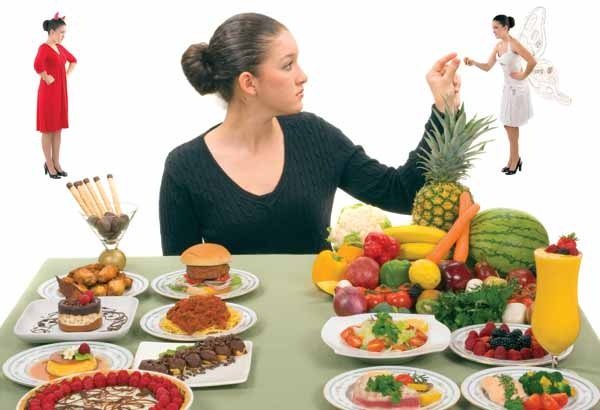
Orthorexia Nervosa is characterized by an excessive focus on eating healthy foods. Basically, its sufferers start out with a simple desire to live a healthy lifestyle, but they become so preoccupied with eating healthily that it becomes an unhealthy obsession.
Unlike with anorexia, orthorexics don’t necessarily think they’re fat. Their underlying motivation, therefore, is not to be thin or lose weight, but to be “pure.” However, with such restrictive diets, they can become just as malnourished as anorexics. People suffering might avoid certain foods, such as non-organic foods, cooked foods, or processed foods. (Feel free to click over to the following post for more about my thoughts on processed foods.)
This doesn’t mean that every vegan, raw foodist, or person who strives to eat a healthy diet has orthorexia. It’s only when the healthy diet becomes an obsession; when a person spends hours planning out his/her “perfect” diet, calculating nutrients, preparing everything in a very specific way (and not letting anyone else prepare his/her food), that one can be seen to have a problem.
People suffering from orthorexia may display some of the following signs:
- Feeling virtuous about what they eat, but not enjoying their food much
- Continually cutting foods from their diet
- Experiencing a reduced quality of life or social isolation because their diet makes it difficult for them to eat anywhere but at home
- Feeling critical of, or superior to, others who do not eat as healthily they do
- Skipping foods they once enjoyed in order to eat the “right” foods
- Choosing to eat foods based solely on nutritional value, instead of eating what they’re craving
- Feeling guilt or self-loathing when they stray from their diet
- Feeling in total control when they eat the “correct” diet
I can definitely see myself, if not careful, displaying some of the other orthorexic tendencies, like feeling critical or looking down on certain foods, such as white bread, white pasta, and white rice, deeming them “valueless.” Does having one of the characteristics mean I have orthorexia?
No, of course not.
But I do have to remind myself that just because it’s white bread does not mean it’s worthless. After all, a food is so much more than its numerical nutritional value. The French have been eating white bread for years, the Japanese eat white rice, the Italians enjoy white pasta… and so on.
Sure, it’s great to eat a healthy diet 90% of the time, mostly choosing whole-grains over white ones. But honestly, a little nutritionally valueless piece of white-flour-white-sugar cake every now and then is not going to hurt you. It’s not something you should feel guilty about, but something to be enjoyed! And the enjoyment you can get out of eating it will boost your mental (and thus physical) health! My great-grandma ate processed foods, drank coffee, and—as an Italian—loved her daily servings of white pasta. But one thing my great-grandma did NOT invite into her life was stress. She lived well into her 90s.
There’s a lesson to be learned here: Stress and guilt are much more detrimental to one’s health than eating a few refined grains every now and then. In the end, “Orthorexia Nervosa” is just a label. Whether you fit that label or not, we can all probably benefit from the reminder that food is only one component to a healthy life. Eat what your body truly craves, exercise (but not excessively), feed your soul, and–above all–try to stress as little as possible. Such is the way to a healthy life. (Sounds like something Confucius would say!)
What are your thoughts on all of this?









Thank you so much for writing an posting this! Reading these comments, I am so happy to know that I am not alone in my struggles and you’ve inspired me to start to work harder to get better. So not only thank you to Katie, but thank you to EVERYone for helping me to know I’m not the only one struggling!
Great post! I can relate to several of these tendancies at one point or another but it’s really good to talk about it and refocus on enjoying life and food! That’s why we’re here, right? Thanks for this!
Hey Katie, what’s your formspring account again?
I can’t find it!
😕
😕
Hi Katie!
I came across your blog through Katie’s Yes I Want Cake (way too many Katies here!). Your blog is really interesting and I am following you now as I am always looking for some healthy eating inspirations. After reading Food Rules and In Defense of Food lately, I have really been making an effort to reduce the processed foods in my diet and incorporate more whole grains and veges. So far so good and I can’t wait to try out some of your baby recipes!
KT
I’m so glad you pointed this out! There’s so much more to EDs than anorexia and bullimia and it’s absolutely wonderful to inform your readers about other issues!
I think I do have some tendencies in being obsessive about healthy foods. I eat crisps, chocolates and biscuits in moderation and don’t feel guilty about it at all but that’s because I am in control of that, I can choose to eat it or not without affecting anyone around me.
But, in a few weeks I will be going on a field trip with Uni and we will be staying in Poland for 5 days.
I am SO scared, this really stresses me out because I will not have the control over what I’m going to eat. I won’t be the one who will cook the food and I don’t know how people cook it. Though I don’t worry about dinners so much (as we will just eat in restaurants and I can pick whatever off the menu) I worry about breakfasts and lunches.
I try to eat the healthiest breakfast possible, whole grains, healthy fats, protein. I want to cover as much as possible. For lunch I usually eat raw veggies and fruits and snack in between. When we are going around I don’t want to be the pain in everyone’s backside because I will not buy myself a sandwich for lunch or not eat that burger etc. I have a routine, not strict but a routine nevertheless and I am so scared about those few days, especially because I won’t be able to workout either, they don’t have those facilities in the hotel.
I thought about taking foods, like good raw protein bars and some peanut butter BUT we are travelling with hand luggage only which means I won’t have the space nor am I allowed to take liquidy things like peanut butter with me on board.
My bf assured me I will be ok, I don’t have to eat things I don’t want to eat and 5 days without a workout isn’t the end of the world but it still stresses me out…
I feel embarrassed, what will the other people think? I don’t want to come across as some crazy person or something.
So I guess my diet does restrict me in certain ways but I will try to make the best of the situation and maybe get creative instead of stressed out…
Sorry for the looooong post.
xxx
Hi there, I just wanted to reach out as your post really connected with me. I suffer very similar anxieties to you in regards to food and particularly exercise. I am so desperate to just stop obsessing over food and to stop exercising for a few days as I know it’s what my body desperately needs, but I’m too scared! You are doing an amazing job and I hope the trip went well, and by taking a break from the routine it probably meant you had an amazing time and could enjoy yourself without being restricted by your routine!! X
Hi there, I just wanted to reach out as your post really connected with me. I suffer very similar anxieties to you in regards to food and particularly exercise. I am so desperate to just stop obsessing over food and to stop exercising for a few days as I know it’s what my body desperately needs, but I’m too scared! You are doing an amazing job and I hope the trip went well, and by taking a break from the routine it probably meant you had an amazing time and could enjoy yourself without being restricted by your routine!! 🙂
I loved this post, and admire that you can admit that you have some tendencies also, because god knows no one eats “perfectly”, and what fun would that be? I have heard of orthorexia once before, and it really hit home with me. When I was at my lowest weight, I think it was definitely a result of orthorexia because I was always eating 4-5 times a day, but I restricted my food choices to very specific things. I was also very self conscious of my body because of how skinny I got. I saw a nutritionist and was able to gain a bit of weight, and it also helped me see that eating occasional sweets, white bread, and some processed food was OK! It does not harm you if it is in moderation! Anyways, thanks for writing this post because it’s important to note that balance is much healthier than “perfect eating” can ever be!
-Katie
Thanks, Katie! Your comment really meant a lot to me, because it WAS a little difficult to admit to everyone that I sometimes struggle with feeling like I need to make “healthy” choices all the time!
the media really does screw with our heads, doesn’t it??? if it’s not “be skinnier” then it’s “be healthier”. In any case, it’s always “you’re not perfect”. screw the media! you rock katie!
Wow, I’d never heard of this before. Thanks for compiling all this information for us and giving it to us in such a well written way. Not like your posts aren’t always well written of course. It’s one of the things I love most about your blog. That and your amazing attitude towards life. Cheers!
Excellent post, Katie! At times I think I’ve had orthorexic tendencies, but I’m fairly relaxed about having treats now. Especially chocolate and/or peanut butter covered treats. 🙂
Loved this post Katie 🙂
I definitely have a tendency to “look down upon” refined grains/sugars, chemicals, etc. I wouldn’t say it controls me though. Especially when it comes to dessert…if you’re going to indulge, then indulge! If you’d prefer the refined, sweet cookie versus the whole grain one then you should enjoy it!
Thank you for this post, and for being honest about the fact that orthorexia is something that us food bloggers are probably more susceptible to than most. I definitely feel so much better about myself when I eat whole and virtuous foods, I even think that subconsciously things taste a little bit better when I know that they are full of good-for-me ingredients. However, I would never pass up the opportunity to try something I really wanted to taste, even if I knew it was full of things that do nothing good for me physically.
It’s a terribly slippery slope, and I really wonder how this newly classified disorder is going to affect doctors, patients, and anyone who is committed to healthy living. I have no doubt that there will be much debate and controversy, but as long as we all do what we think is best for our physical and mental health, it should not be a problem.
I can relate to the Katie above- I’ve been in the position where, even though I was eating 6 times a day, I was still losing weight.
A lot about me changed when I stopped running. I didn’t have the pressure to eat perfectly anymore because there wasn’t a team full of people or an athletic scholarship dependent on my times. I was so miserable when I was injured and just said “screw it” to eating dainty portions of healthy food. I ate cookies, and cakes, and candy and ice”cream” and didn’t restrict what I could enjoy at all. I discovered I don’t really enjoy meat, and can do without it.
I feel like I’ve come so far, and last Thursday one of my “friends” called me orthorexic because I don’t eat meat or milk. I was so shocked, and she went on to say that I restrict my diet and have an obsession with healthy eating.
This post is really honest and I really appreciate it!
I agree with everyone. This is SUCH a great post for our blogging community!
wonderful post, katie!!
i totally, totally agree with you! i lead a very healthy diet/lifestyle myself, but if feel when you have cravings now and again it´s better to give in instead of stressing yourself!
thx so much for bringing up this topic!
love
hela
very honest and great post! 🙂 we all need to have balance! that is key! orthorexia i always think “ohh just another term for an anorexic” But there is a difference. But so similar, so similar that one suffering from Orthorexic tendencies, must be so careful not to let it become something life threatening. You made such great/valid points in this Katie! everyone deserves to eat what ever they LOVE. 🙂
xx
maya
Hi!!
Loved this post! I must say, while I have anorexia I don’t have orthorexia…phewww! I eat lots of take-out and processed stuff, as long as it taste good.
I will also have wheat bread rather than white…but that doesn’t mean I have orthorexia. 😉
And I don’t want to imagine how much I’ll spend on food if I had orthorexia!! Chia seeds, organic this/that…omg! Much prefer to win this in a giveway :p